

Why Digital Psychology Is Essential for Every Marketing Student

Table of Contents
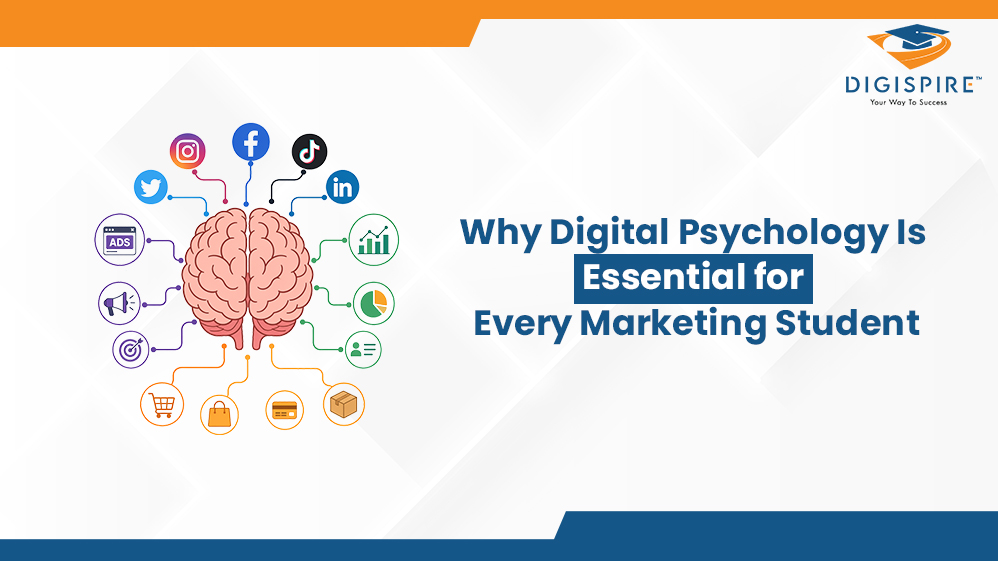
The digital world is not just about algorithms, ads, and analytics. At its core, it is about people how they think, what drives their decisions, and what keeps them scrolling at midnight. That is precisely where digital psychology steps in. For students pursuing a career in digital marketing, understanding the psychological principles behind online behaviour is no longer optional. It is foundational.
What Is Digital Psychology?
Digital psychology is the study of how human behaviour, emotions, and decision-making are influenced by digital environments. It draws from cognitive psychology, behavioural economics, and UX research to explain why people click, buy, share, or abandon a page. Think of it as the science that sits behind every successful campaign the invisible hand that shapes what users feel before they act.
People do not buy products. They buy feelings, identities, and solutions and digital psychology helps marketers understand exactly which levers to pull.
Why Should Marketing Students Care?
Marketing today is saturated. Brands compete for fractions of a second of human attention. A marketer who understands digital psychology knows how to design experiences that resonate, not just reach. Here is why it matters for students specifically:
- You learn to think like your audience not just their demographics, but their cognitive biases, fears, and motivators.
- You make data more meaningful analytics tells you what happened; psychology tells you why.
- You design better campaigns from email subject lines to landing page layouts, psychological principles guide every micro-decision.
- You stand out in the job market employers increasingly look for marketers who blend creativity with behavioural insight.
- You reduce costly trial and error when you understand how people process information online, you can predict what will work before you spend budget testing it.

Key Concepts From Digital Psychology Every Marketer Should Know
Getting familiar with these principles early gives students a significant advantage:
- Cognitive load: Users abandon pages that make them think too hard. Simpler navigation, clearer copy, and fewer choices reduce friction and boost conversions.
- Social proof: Reviews, follower counts, and user-generated content tap into our instinct to follow the crowd. Knowing this helps marketers build trust at scale.
- The scarcity effect: “Only 3 left in stock” or “Offer ends tonight” triggers loss aversion. Used ethically, this principle drives urgency without manipulating users.
- Anchoring: The first price or piece of information a user sees shapes how they evaluate everything that follows. Product pricing, feature ordering, and headline writing all benefit from this insight.
- Colour psychology: Different colours evoke different emotions. A call-to-action button in red creates urgency; blue builds trust. These are not hunches they are documented psychological responses.
- The paradox of choice: Offering too many options leads to decision paralysis. Digital psychology teaches marketers when to curate rather than overwhelm.
How It Applies Across Digital Marketing Channels
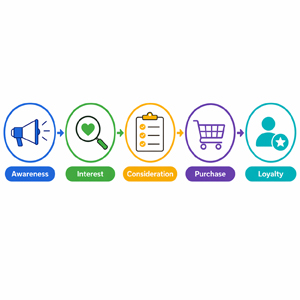
Digital psychology does not belong to one channel it cuts across every touchpoint in the customer journey:
- SEO and content marketing: Understanding how users scan pages (F-pattern reading, for example) informs how to structure blogs, where to place keywords, and how to use headlines effectively.
- Social media: Emotional triggers like humour, nostalgia, and belonging drive shares. Knowing which emotions align with your brand helps create content that people actually want to spread.
- Email marketing: Personalisation, subject line curiosity gaps, and the timing of messages are all rooted in psychological principles of attention and motivation.
- Paid advertising: Ad copy that speaks to pain points and aspirations outperforms generic messaging because it connects emotionally before it persuades logically.
- E-commerce UX: Cart abandonment, checkout friction, and product page design are all problems that digital psychology helps diagnose and solve.

The Ethical Dimension
Understanding how to influence people online comes with real responsibility. Students who study digital psychology must also reckon with where persuasion ends and manipulation begins. Dark patterns deceptive design choices that trick users are a growing concern for regulators and consumers alike. Marketers who understand psychological principles have a duty to use them transparently, building long-term trust rather than short-term gains. Ethical digital marketing is not just good practice; increasingly, it is good business.
Integrating Psychology Into Your Marketing Skill Set
Students do not need a psychology degree to benefit from this knowledge. A few practical steps to get started:
- Read foundational books like Influence by Robert Cialdini and Thinking, Fast and Slow by Daniel Kahneman.
- Study real campaign breakdowns ask not just what worked, but why it worked psychologically.
- Run A/B tests on your own projects and observe how small changes in language or layout affect user behaviour.
- Take courses that combine UX, consumer behaviour, and marketing strategy.
- Follow brands with strong reputations for emotional storytelling and analyse their techniques critically.
The marketers who will shape the next decade are those who combine technical skills data, tools, platforms with a deep understanding of the humans behind the screens. Digital psychology is the bridge between knowing what people do and knowing why they do it. For students entering this field, there is no more valuable lens to develop.
FAQs
It is increasingly offered as a standalone module in marketing and UX programmes, though its principles are also woven into consumer behaviour, branding, and content strategy courses.
Not at all. Most core concepts are accessible without a psychology degree practical frameworks from books, courses, and case studies are enough to get started.
Traditional consumer psychology focuses on offline behaviour and broad motivations, while digital psychology specifically examines how screen-based environments, algorithms, and interaction design shape online decisions.